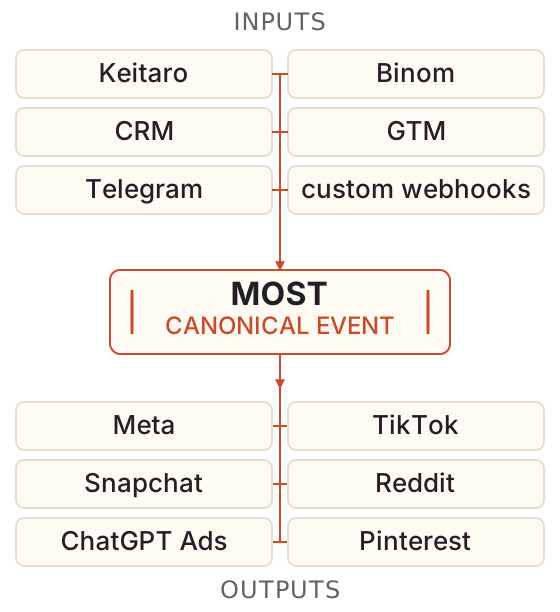
- Keitaro
- Binom
- CRM
- GTM
- Telegram
- custom webhooks
MOST · CONVERSION ROUTER
One bridge for every conversion
Connect the systems where conversions start to the advertising platforms that need the signal. Most accepts events, gives them one canonical shape, and delivers them through clear, controllable routes.
The connector model · 01
Add sources and destinations independently
Most keeps the center stable: connect an input once, then route its normalized events wherever your team needs them.
The same canonical event can move from any connected source to any connected advertising system.
- Meta
- TikTok
- Snapchat
- ChatGPT Ads
What Most handles · 02
A clean path from event to decision
The system handles the plumbing so your team can focus on signal quality, routing logic, and the decisions that follow.
Sources
Bring in events from trackers, CRM, GTM, Telegram, and custom webhooks.
Canonical format
Normalize different payloads into one consistent event model before delivery.
Flows
Choose which events go where with explicit, reusable routing rules.
Deduplication
Keep repeated signals from becoming repeated conversions with stable event identity.
Delivery and retry
Send through the right path and retry temporary failures with delivery visibility.
Quality and diagnostics
See what was accepted, transformed, delivered, or needs attention.
A repeatable operating loop · 03
Connect, map, route, control
A route stays understandable from the first connector to the final delivery receipt.
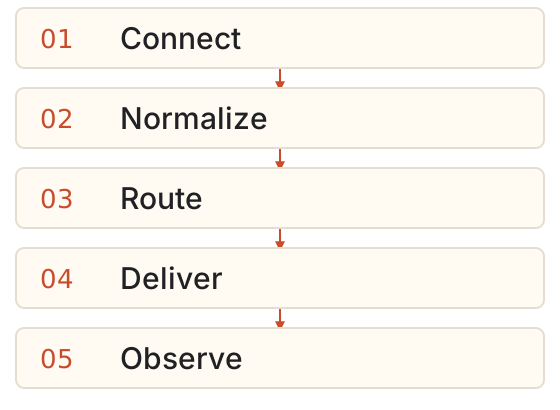
Connect
Attach a source and destination with the credentials and proxy policy your team controls.
Map
Match source fields to a canonical event and select the conversion statuses that matter.
Route
Apply flow rules to send the right events to the right advertising systems.
Control
Inspect delivery, retries, logs, and quality signals from one workspace.
Quality monitoring · 04
Inspect conversion health where ad platforms measure it
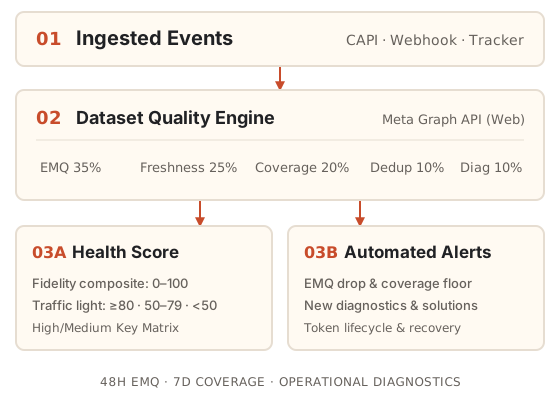
Sending conversions is only half the job. Most monitors Meta Dataset Quality signals, tracks Match Key coverage, alerts on EMQ drops, and diagnoses deliverability issues that degrade event match quality.
Diagnostic Health Score
Weighted assessment of data fidelity: EMQ (35%), Freshness (25%), Coverage (20%), Deduplication (10%), and Diagnostics (10%). Evaluates data hygiene and event delivery without speculative performance claims.
Proactive alert rules
Instant signals on EMQ drops, coverage below configured goals, new Meta diagnostics, event freshness degradation, and invalid access tokens.
Transparent measurement boundaries
Dataset Quality API calculates metrics only for website events in a 48-hour rolling EMQ window and a 7-day coverage window. Server ingestion logs provide exact intake timestamps, while Quality serves as an operational diagnostic tool, not a guarantee of ad performance.
Built for performance teams · 05
Operational clarity is part of the product
Most is designed for teams that need to move quickly without losing control over data, access, or delivery.
Tenant isolation
Keep each company’s sources, destinations, flows, and credentials separated in its own workspace.
Your proxy, fail-closed
Route supported advertising requests through your own SOCKS5 proxy and stop safely when it is unavailable.
Delivery visibility
Trace an event from intake to response with statuses, retries, and operational logs.
Start with the route · 06
Show us where your conversion data starts
We will map the current stack and point out the shortest path to a reliable delivery loop.